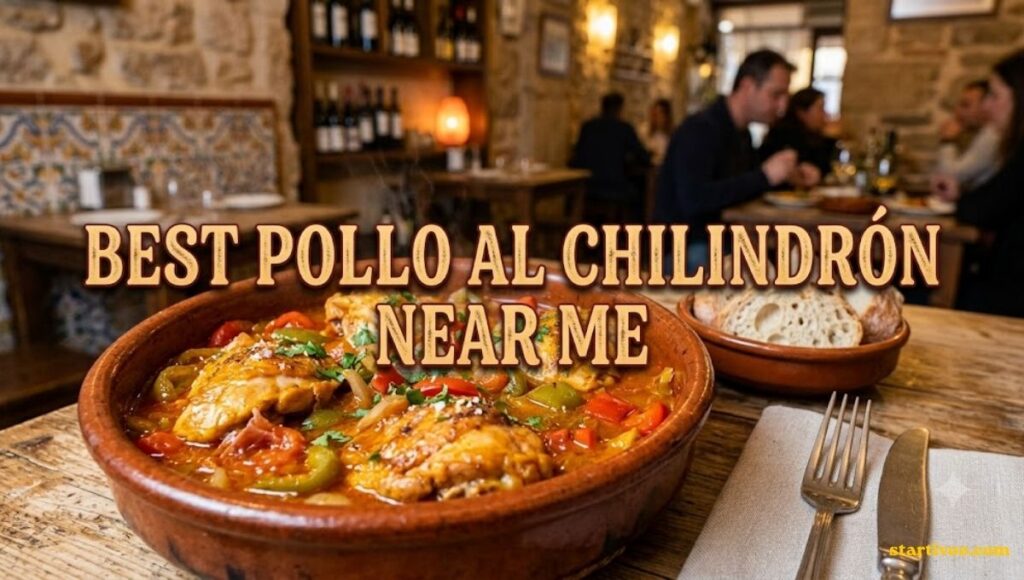
If you’ve ever scrolled through a Spanish restaurant menu and stopped cold at the words “pollo al chilindrón,” you’re not alone. It’s one of those dishes that doesn’t get nearly the spotlight it deserves in the US, especially compared to paella or patatas bravas. But once you’ve had a good version of it, you start hunting for it everywhere. This guide walks you through what the dish actually is, why it’s harder to find than you’d expect, and how to search for the best pollo al chilindrón near me without wasting a Friday night on a mediocre plate.
What Is Pollo al Chilindrón?
Pollo al chilindrón is a braised chicken dish that comes from Aragón, a region in northeastern Spain. The name “chilindrón” refers to the sauce itself: a thick, slow-cooked blend of tomatoes, red bell peppers, onion, and garlic, usually finished with olive oil and sometimes a bit of cured ham or paprika for depth.
Unlike a lot of Spanish dishes that lean on seafood or rice, chilindrón is a hearty, rustic, mountain-country meal. Think of it as Spain’s answer to chicken cacciatore, but with its own distinct personality — smokier, a little sweeter from the peppers, and built around a sauce that’s meant to be mopped up with bread, not left on the plate.
It’s also worth knowing that “chilindrón” isn’t exclusive to chicken. You’ll sometimes see the same sauce used with lamb or rabbit, particularly in more traditional or countryside restaurants. If a menu lists “chilindrón” without specifying chicken, don’t assume — ask.
Why People Search “Pollo al Chilindrón Near Me”
There’s a real, growing interest in regional Spanish cooking that goes beyond the usual suspects. For years, “Spanish food” in the US basically meant paella, sangria, and maybe a tapas platter. That’s changing.
A few things are driving the search volume for this specific dish:
- Spanish expats and travelers who fell in love with the dish in Aragón, Navarra, or La Rioja and can’t find it back home
- Food-curious diners who’ve exhausted the usual Spanish restaurant offerings and want something more regional
- Home cooks researching the dish before attempting it themselves, then deciding they’d rather find a restaurant that already nails it
- Social media exposure regional Spanish dishes have been getting more attention on food platforms over the last couple of years
Here’s the catch: because it’s a regional dish rather than a national icon like paella, most “Spanish restaurants” in the US simply don’t carry it. That’s exactly why the search itself has become so specific. People aren’t just looking for Spanish food anymore — they’re looking for this dish, by name.
There’s also a practical reason chilindrón is harder to find than, say, tapas. It’s a slow braise, which means it doesn’t fit neatly into a fast-turnover restaurant kitchen. A busy tapas bar built around small, quick plates isn’t set up to babysit a pot of sauce for an hour. That’s part of why you’ll find chilindrón more often at smaller, family-run restaurants than at large, high-volume Spanish chains — the dish simply demands a different kind of kitchen rhythm.
It also helps to understand who’s actually driving the demand. A lot of the search traffic for this dish comes from people who already know exactly what they want and just need help locating it, rather than casual diners discovering the dish for the first time. That’s a meaningfully different kind of search than “best Spanish restaurant near me,” and restaurants that understand this — by naming the dish clearly on their menu and website — tend to capture that traffic more effectively.
The Ingredients That Define Authentic Chilindrón
A great chilindrón isn’t complicated, but it is particular. Miss one ingredient, or swap it for a shortcut version, and the whole dish falls flat. Here’s what actually needs to be in the pot.
Chicken
Bone-in, skin-on chicken pieces are non-negotiable for a traditional preparation. The bones add body to the sauce during the long braise, and the skin helps everything brown properly before the liquid goes in. Boneless, skinless chicken breast — which, let’s be honest, shows up on a lot of “Americanized” versions — just doesn’t hold up the same way over an hour of slow cooking.
Red Bell Peppers
This is the backbone of the sauce’s color and sweetness. Traditional recipes often call for dried red peppers (like ñora or choricero peppers) rehydrated and blended in, though fresh red bell peppers are the more common substitute you’ll find stateside. Some restaurants use jarred piquillo peppers, which actually work quite well and add a nice roasted note.
Tomatoes
Ripe, cooked-down tomatoes form the sauce’s base alongside the peppers. The tomato shouldn’t dominate — it’s there to add acidity and body, not to make the dish taste like marinara.
Onion and Garlic
Standard aromatics, but the way they’re cooked matters. A proper sofrito (onion and garlic slowly softened in olive oil before anything else goes in) takes real time often 20 to 30 minutes on low heat. Restaurants that rush this step end up with a sauce that tastes flat, no matter how good the other ingredients are.
Olive Oil
Spanish olive oil isn’t just a cooking fat here it’s a flavor ingredient in its own right. A good chilindrón will taste noticeably different depending on whether the kitchen used a mild, generic vegetable oil or a real Spanish extra virgin olive oil.
Jamón Serrano or Smoked Paprika
This is where regional and family variations show up most. Some versions add small pieces of jamón serrano for a salty, savory depth. Others lean on smoked paprika (pimentón) instead, which brings a similar smokiness without the meat. Neither is more “correct” — it comes down to the region and the cook.
A quick note on wine: some households and restaurants also splash in a bit of dry white wine or sherry vinegar toward the end of cooking, which brightens up what would otherwise be a fairly heavy, rich sauce. It’s not in every recipe, but if you taste a slight tang cutting through the sweetness of the peppers, that’s likely what’s happening.
| Ingredient | Traditional Role | Common US Substitute | Impact of Substitution |
|---|---|---|---|
| Bone-in chicken | Body and richness in the braise | Boneless chicken breast | Thinner sauce, drier meat |
| Dried red peppers (ñora) | Deep, sweet pepper flavor | Fresh red bell pepper | Slightly less complex, still solid |
| Ripe tomatoes | Acidity and body | Canned crushed tomato | Minimal impact if quality is good |
| Spanish olive oil | Flavor base | Generic vegetable oil | Noticeably flatter overall taste |
| Jamón serrano | Salty depth | Smoked paprika (pimentón) | Different, not worse — just distinct |
Regional Variations Worth Knowing
If you’re searching for the best pollo al chilindrón near me and keep hitting dead ends, it helps to understand that this dish isn’t uniform even within Spain.
- Aragonese style is considered the “original,” typically using dried red peppers and a longer braise time.
- Navarrese style sometimes leans sweeter, with a heavier hand on the peppers and a slightly thicker sauce.
- Rabbit or lamb chilindrón shows up more in countryside or traditional Basque-adjacent restaurants, where chicken is actually the less common protein for this sauce.
Knowing this matters because if a restaurant lists “chilindrón” on the menu without chicken specified, it might be a completely different protein — and that’s not a mistake on their part, it’s just how the dish works across regions.
How to Find Real Pollo al Chilindrón Near You
Searching “Spanish restaurant near me” is going to get you a hundred paella-and-sangria spots. That’s not what you want. Here’s a better approach:
- Search with specificity. Try “Aragonese restaurant,” “Basque restaurant,” or “regional Spanish cuisine” instead of just “Spanish food.” These terms tend to filter out the tapas-bar-and-sangria crowd.
- Check the full menu before you go, not just the homepage. Restaurants that actually serve chilindrón will usually list a few other lesser-known Aragonese or Navarrese dishes too — that’s a good signal.
- Read recent reviews, not just the star rating. Look for mentions of “chilindrón,” “braised chicken,” or “Aragón” specifically in the text of reviews, since a lot of review platforms won’t let you filter by dish name directly.
- Ask the restaurant directly. A quick call or message asking “Do you have pollo al chilindrón, and is it made fresh?” tells you a lot — both from the answer and from how quickly they can answer it.
- Look for chef or owner background. Restaurants run by someone from Aragón, Navarra, or the Basque Country are far more likely to have this dish done right, even if it’s not always on the printed menu.
How to Spot a Great Spanish Restaurant
Not every restaurant that serves chilindrón serves it well. A few signs separate the real thing from a watered-down version:
- Menu depth. If the entire menu is paella, sangria, and a “tapas sampler,” be skeptical. Restaurants that go deeper into regional dishes tend to take the whole cuisine more seriously.
- Ingredient sourcing. Ask if they use Spanish olive oil and real jamón. A kitchen that cares about sourcing usually mentions it without hesitation.
- Slow-cooked signals. If the chicken comes out in under 15 minutes of ordering, there’s a good chance it wasn’t braised fresh — chilindrón typically needs at least 45 minutes to an hour of cook time.
- Bread on the table by default. This sounds small, but a kitchen that understands the dish knows the sauce is meant to be soaked up. If bread isn’t offered automatically, it might be a sign the kitchen isn’t thinking about the dish the traditional way.
One food blogger who reviewed a small Aragonese spot in New Jersey put it simply:
“You can tell a real chilindrón by the sauce alone — it should coat the spoon, not run off it. If it’s thin and soupy, someone skipped the sofrito.”
That’s about as good a litmus test as you’ll get without tasting it yourself.
Restaurant-Style vs. Homemade Chilindrón
If you’ve tried making chilindrón at home and it came out okay but not quite like what you remember from a restaurant, you’re not doing anything wrong — there are real differences in how each version gets made.
| Factor | Restaurant Version | Homemade Version |
|---|---|---|
| Cook time | Often prepped in batches, sauce base made hours ahead | Usually made start-to-finish same day |
| Sofrito depth | Long, slow-cooked base, sometimes hours | Often rushed to 10–15 minutes |
| Ingredient access | Bulk-sourced Spanish olive oil, jamón, dried peppers | Frequently substituted with local equivalents |
| Consistency | Standardized recipe, repeatable results | Varies batch to batch |
| Flavor complexity | Deeper, from batch-cooked sauce bases | Lighter, fresher, sometimes less rich |
Neither version is “wrong.” A good home cook using fresh ingredients and patience can absolutely match a restaurant plate — it just takes more time than most people expect to give a weeknight dinner.
What to Expect When You Order It
If you’ve never had chilindrón before, here’s a realistic picture of what lands on your table.
- Portion size: Usually a generous plate — expect two to three pieces of bone-in chicken swimming in sauce, not a small, plated portrait like you’d get at a fine-dining spot.
- Price range: In the US, expect somewhere between $18 and $32 depending on the restaurant and city. Higher-end spots with imported Spanish ingredients tend to sit at the top of that range.
- Presentation: Rustic, not fussy. This is peasant food in the best sense — hearty, sauce-forward, meant to be shared.
- A good question to ask: Whether the sauce is made fresh that day or from a pre-made batch. Either can be good, but it’s worth knowing what you’re getting.
Best Side Dishes to Pair With Pollo al Chilindrón
The sauce is really the star here, so sides tend to play a supporting role — but the right ones make a big difference.
- Crusty bread non-negotiable, honestly. You’ll want it for the sauce.
- Patatas a lo pobre thin-sliced potatoes slow-cooked in olive oil with onions and peppers. A natural match in flavor and origin.
- Spanish rice (arroz blanco) simple white rice works as a neutral base if you want something more filling than bread alone.
- A dry Spanish white or young red wine a Garnacha from Aragón is the regionally “correct” pairing, though a light Rioja works well too.
Why This Dish Deserves More Attention
Paella gets the tourism-poster treatment. Tapas get the Instagram treatment. Chilindrón, meanwhile, sits quietly in the background as one of Spain’s genuinely great comfort dishes and that’s a shame, because it’s arguably easier to fall in love with than either of those more famous exports.
It’s not delicate. It’s not fussy. It’s a braised, saucy, deeply flavored chicken dish that rewards patience in the kitchen and pairs beautifully with something as simple as bread. If you’ve had good Italian braises like osso buco or chicken cacciatore, chilindrón sits comfortably in that same emotional category warm, rustic, built for slow Sunday dinners rather than quick weeknight meals.
There’s also something to be said for the storytelling behind it. Chilindrón traces back to a region of Spain that doesn’t get nearly the tourism traffic of Barcelona or Madrid, and the dish carries that mountain, working-farm heritage in every bite. Ordering it isn’t just picking a meal off a menu it’s tasting a specific place, made by people who likely still cook it close to the way their grandparents did.
That’s also why chasing down a genuinely good version matters more than it might for a more mainstream dish. A mediocre paella is still recognizably paella. A mediocre chilindrón, on the other hand, can taste like a generic tomato-braised chicken with none of the character that makes the real thing special. The difference between a rushed sofrito and a properly slow-cooked one isn’t subtle it’s the difference between a forgettable dinner and one you’ll be thinking about a week later.
The next time you’re scrolling for dinner options and thinking about typing in “best pollo al chilindrón near me,” give the search a real shot using the tips above. It’s worth the extra five minutes of digging, and once you find a kitchen that gets it right, it tends to become a regular stop rather than a one-time curiosity.
FAQ
Is pollo al chilindrón spicy?
Not typically. The peppers used add sweetness and depth rather than heat. If a version tastes spicy, it likely includes additional chili elements not found in the traditional recipe.
What’s the difference between chilindrón and cacciatore?
Both are braised chicken in a tomato-pepper-based sauce, but chilindrón leans on Spanish olive oil, sweeter red peppers, and sometimes jamón, while cacciatore typically includes mushrooms, wine, and Italian herbs like oregano and rosemary.
Can I find it at Mexican or Latin restaurants?
Generally no despite the Spanish-language name, this is a specifically Spanish (Aragonese) dish, not a Latin American one. Don’t expect to find it on a typical Mexican or Latin restaurant menu.
Is it gluten-free or dairy-free by default?
Yes, in its traditional form. The base ingredients chicken, peppers, tomato, onion, garlic, olive oil — contain no gluten or dairy. Always double-check with the specific restaurant, though, since some kitchens add flour to thicken the sauce or finish dishes with butter.