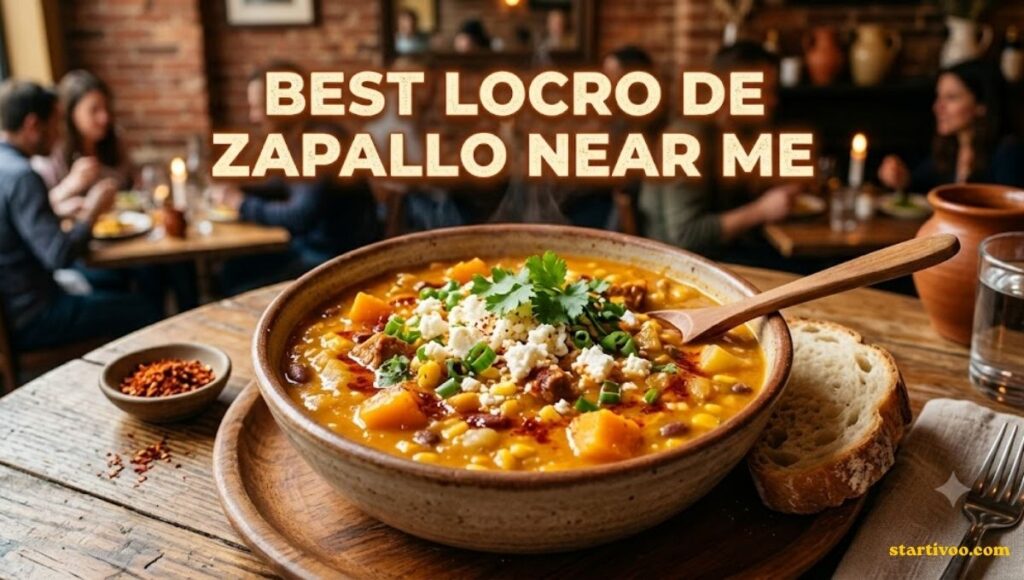
If you’ve typed “best locro de zapallo near me” into Google at nine at night, craving something warm and a little sweet and completely unable to explain what you’re craving to anyone around you, you’re not alone. This dish has a way of sneaking into people’s lives and staying there. It’s the kind of meal that makes you want to cancel your other dinner plans.
This guide breaks down everything worth knowing before you go looking: what the dish actually is, what separates a great bowl from a forgettable one, and how to search smarter so you actually land on the real thing instead of a watered-down imitation.
What Is Locro de Zapallo, Exactly
Locro de zapallo is a thick, hearty stew built around squash or pumpkin, simmered until it breaks down into something between a soup and a puree. The name itself trips people up. “Locro” on its own usually refers to a corn-based stew popular across Argentina, especially around national holidays. Add “de zapallo,” and you’re talking about the squash-forward cousin — sweeter, silkier, and a little more forgiving to cook at home.
The dish traces back to Andean cooking traditions, long before national borders in South America looked the way they do now. Squash, corn, and beans were staples of Andean agriculture for thousands of years, and locro de zapallo is essentially a direct descendant of that pantry. Over time it spread through Argentina, Peru, Bolivia, and Ecuador, picking up regional twists along the way.
Here’s where it gets confusing for anyone searching online: different countries call variations of this dish different things. You might see it listed as “zapallo en crema,” “crema de zapallo,” or even just “locro” on a menu, depending on where the restaurant’s owners are from. If you’re hunting for the best locro de zapallo near me and coming up empty, try a few of these alternate names — you might be missing restaurants that serve the dish but don’t call it exactly what you’d expect.
Quick fact check:
| Term | What It Usually Means |
|---|---|
| Locro | Corn-based stew, often with meat |
| Locro de zapallo | Squash/pumpkin-based version |
| Zapallo en crema | Creamy squash soup, sometimes without the heartier stew ingredients |
| Crema de zapallo | Similar to above, more soup than stew |
Why Locro de Zapallo Is Becoming So Popular
A few years ago, this dish barely showed up outside South American households and neighborhood restaurants. That’s changed, and not by accident.
Comfort food has been having a moment for a while now, and stews in particular have benefited from it. There’s something about a dish that takes hours to make right that appeals to people tired of fifteen-minute meal kits. Locro de zapallo fits that mold perfectly — it’s slow, it’s rustic, and it photographs beautifully once it’s ladled into a bowl with a swirl of color on top.
Social media gets some credit here too. Food content built around “hidden gem” restaurants and traditional family recipes tends to perform well, and this dish checks both boxes. It looks impressive without looking fussy, which matters a lot when people are scrolling for dinner inspiration.
Seasonality plays a role as well. Interest in locro de zapallo spikes during fall and winter months, which tracks with when squash is actually in season and when people start craving heavier, warming meals. If you’re searching in July, you may find fewer restaurants offering it than if you search in October.
“People don’t just want to eat locro de zapallo. They want to feel like they found something real, something a grandmother somewhere actually taught someone to make.” a common sentiment echoed across food forums and local restaurant reviews.
What Makes the Best Locro de Zapallo Near Me
This is where most searches go wrong. People type in the keyword, click the first three results, and end up at a place that serves a thin, overly sweet soup with none of the texture that makes the real dish worth seeking out.
A few things separate a genuinely great bowl from a mediocre one, and none of them are complicated to spot once you know what you’re looking for.
Texture matters more than almost anything else. Real locro de zapallo isn’t blended into a smooth puree. You should see chunks of squash holding their shape, bits of corn, maybe beans, sitting in a broth that’s thick enough to coat a spoon but not so thick it turns gluey.
The sweetness should be balanced, not dominant. Squash brings natural sweetness to the dish, and a skilled cook cuts that sweetness with savory elements meat, broth, a touch of paprika or cumin. If a bowl tastes more like dessert than dinner, something’s off.
Fresh ingredients beat convenience every time. Some restaurants make large batches ahead of time and reheat portions throughout the week. Locro doesn’t hold up well to that treatment; it tends to break down further and lose texture. The best versions are made fresh, often in smaller batches, sometimes only available on certain days.
Meat quality is a tell. Traditional recipes often include beef, chorizo, or pork. Kitchens that skimp here, using low-quality cuts or barely any meat at all, are usually cutting corners elsewhere too.
Traditional Ingredients That Create Authentic Flavor
Understanding the ingredient list helps you judge a bowl before you even taste it. Here’s what should realistically be in a proper locro de zapallo.
Squash or Pumpkin
The base of the entire dish. Traditional recipes call for Argentine zapallo, though kabocha squash is a common and reasonably close substitute outside South America. Butternut squash gets used too, though it produces a slightly different flavor profile — a bit less earthy, a bit more uniformly sweet. Whatever the squash, it should be cooked down enough to thicken the broth naturally, without needing flour or cornstarch as a crutch.
Corn
Corn adds texture and a subtle sweetness that plays well against the richness of the squash. Some recipes use fresh corn kernels, others use dried corn that’s been rehydrated, which gives a chewier bite. Either way, corn shouldn’t be an afterthought — it’s part of what gives the stew its body.
Beans
This ingredient gets left out of a lot of casual descriptions of the dish, but many regional recipes include white beans. They add protein and a creamy texture that complements the squash instead of competing with it.
Meat and Chorizo
Beef short ribs, chorizo, and pork are the most common proteins. Some coastal or vegetarian-leaning versions skip meat entirely and lean harder on beans and squash for substance. Both approaches are legitimate, but a restaurant should be upfront about which version they’re serving.
Aromatics
Onion, garlic, cumin, and paprika form the backbone of the seasoning. Some cooks add a touch of chili for warmth without overwhelming heat. These aromatics are what keep the dish from tasting one-note sweet.
Ingredient snapshot:
| Ingredient | Role in the Dish |
|---|---|
| Zapallo/squash | Base and thickener |
| Corn | Texture and mild sweetness |
| White beans | Protein and creaminess |
| Beef, chorizo, or pork | Savory depth |
| Onion, garlic, cumin, paprika | Seasoning backbone |
How to Find Authentic Locro de Zapallo Restaurants
Searching “best locro de zapallo near me” is a fine starting point, but a few tweaks to your search strategy will get you better results.
Try broader terms alongside the specific dish name. Searching for “Argentine restaurant near me” or “Peruvian comfort food near me” often surfaces places that serve the dish but don’t optimize their online listings around it directly. Smaller, family-run restaurants especially tend to under-market themselves online.
Check reviews for specific language. Words like “casero” (homemade) or “abuela” (grandmother) showing up in reviews is usually a good sign that the kitchen is working from an actual family recipe rather than a standardized commercial version.
Ask directly if the dish is made fresh. A quick phone call or a glance at recent reviews mentioning “fresh” or “made to order” can save you a disappointing meal. Restaurants proud of how they make the dish are usually happy to tell you.
Pay attention to seasonality. If a restaurant serves locro de zapallo year-round without variation, that can be a sign they’re using frozen or pre-made bases. Kitchens that treat it as a seasonal fall and winter dish tend to put more care into it, since they’re not trying to stretch one batch across twelve months.
Restaurant Style vs Homemade Locro de Zapallo
Both versions have their place, but they deliver different experiences.
Restaurant-made locro de zapallo tends to be consistent. You’ll generally know what you’re getting visit after visit, since kitchens standardize their recipes for volume and repeatability. The tradeoff is that some restaurants over-thicken the stew for shelf stability, which can dull the texture contrast that makes the dish interesting.
Homemade locro de zapallo varies more from batch to batch, cook to cook, even day to day in the same kitchen. What you gain is control fresher squash, seasoning adjusted to taste, and none of the compromises that come with cooking for a wide customer base. If a restaurant near you offers a “homemade” or “family recipe” version, that’s usually a signal it’s closer to the homemade experience than the standardized one.
If you want the closer-to-homemade experience while eating out, ask if the dish is made in small batches or to order. Some restaurants will happily tell you their approach if you ask directly, and it’s a fair question to ask before ordering.
Signs You Found a Great Bowl of Locro
A few quick signals tell you almost immediately whether you’ve found something worth coming back for.
- Visible squash chunks, not a smooth, uniform puree
- A short, recognizable ingredient list on the menu a sign nothing is being padded with fillers
- A server who can explain the recipe’s origin, even loosely regional roots, a family connection, something beyond “it’s just squash soup”
- Traditional toppings, which vary by region but often include a sprinkle of scallion or a side of bread for dipping
- Balanced flavor, savory notes cutting through the natural sweetness of the squash rather than letting it dominate
If a bowl checks most of these boxes, you’ve likely found a kitchen that respects the dish rather than one just checking a box on a “South American menu” for variety’s sake.
Best Side Dishes and Pairings
Locro de zapallo is rich enough to stand on its own, but a few pairings round out the meal nicely.
Crusty bread works well for dipping and helps balance the stew’s thickness. A simple green salad with a light vinaigrette cuts through the richness without competing with the flavors in the bowl. If the restaurant serves alcohol, a glass of Malbec is a classic pairing that complements the savory depth of the dish without overpowering it.
Empanadas are also a common starter alongside locro de zapallo, and it’s not a coincidence you’ll often see both on the same menu. Spinach, beef, or cheese empanadas offer a lighter contrast before the heavier stew arrives.
Why This Traditional Dish Feels Like Comfort Food
There’s a reason people don’t just eat locro de zapallo they talk about it afterward, describe it to friends, go looking for it again a few weeks later.
Part of it comes down to how it’s traditionally made: slowly, with ingredients that require patience rather than shortcuts. That kind of cooking tends to produce food that feels intentional in a way fast, convenient meals rarely do.
Part of it is cultural memory. For a lot of people with South American roots, this dish is tied directly to family gatherings, cold weather, and specific memories of a grandmother or parent standing over a pot for hours. Even for people without that direct connection, there’s something universally comforting about a thick, warm stew eaten slowly, usually with good company.
And part of it is simply timing. As more people search for authentic, slow-cooked meals instead of trend-driven food, dishes like this one are naturally rising back to the surface. It’s not reinventing anything — it’s just finally getting the attention it’s always deserved outside of the households and neighborhoods where it’s been quietly made for generations.
If you can’t track down a restaurant serving it well, a simplified home version isn’t out of reach. Squash, onion, garlic, a bit of corn, and a protein of your choice simmered low and slow will get you most of the way there, even without every traditional ingredient on hand.
Final Thoughts
Finding the best locro de zapallo near me isn’t about clicking the first search result and hoping for the best. It’s about knowing what the dish is supposed to taste like, what ingredients belong in it, and what questions to ask before you order. Look for visible texture, balanced flavor, and a kitchen willing to talk about how they make it. Once you find a place that gets it right, you’ll understand exactly why this dish has quietly built such a devoted following.