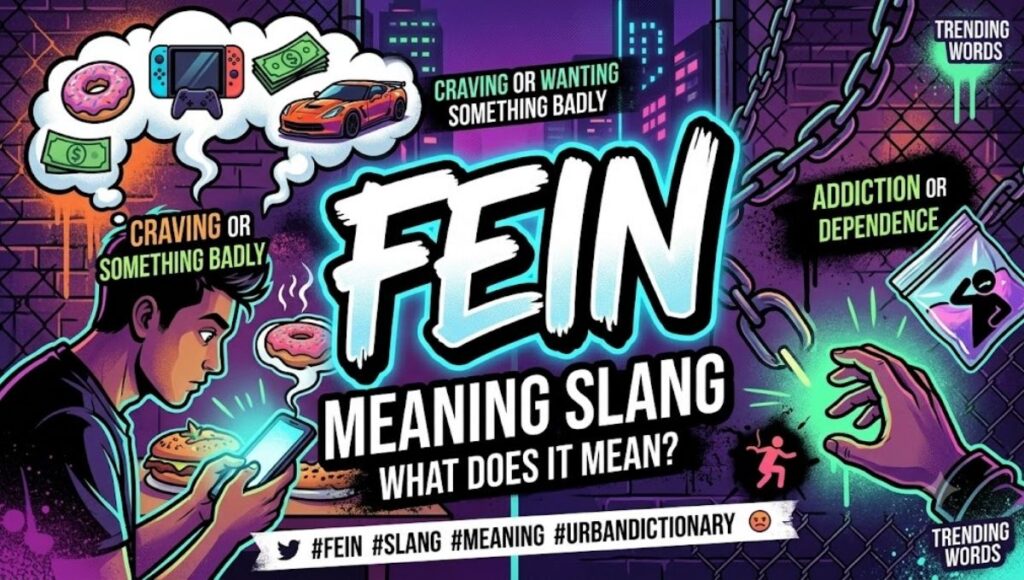
You’ve probably seen it under a TikTok comment or dropped into a group chat: “bro is fein for that.” And if you paused for a second wondering what on earth that meant, you’re not alone. So let’s actually break down the fein meaning slang, where it came from, and how people are using it right now.
This isn’t a word you’ll find sitting neatly in a traditional dictionary with one clean definition. It’s messier than that, and honestly, more interesting. Depending on where you see it, “fein” could mean three completely different things. Let’s sort through them.
Meaning & Definition of Fein
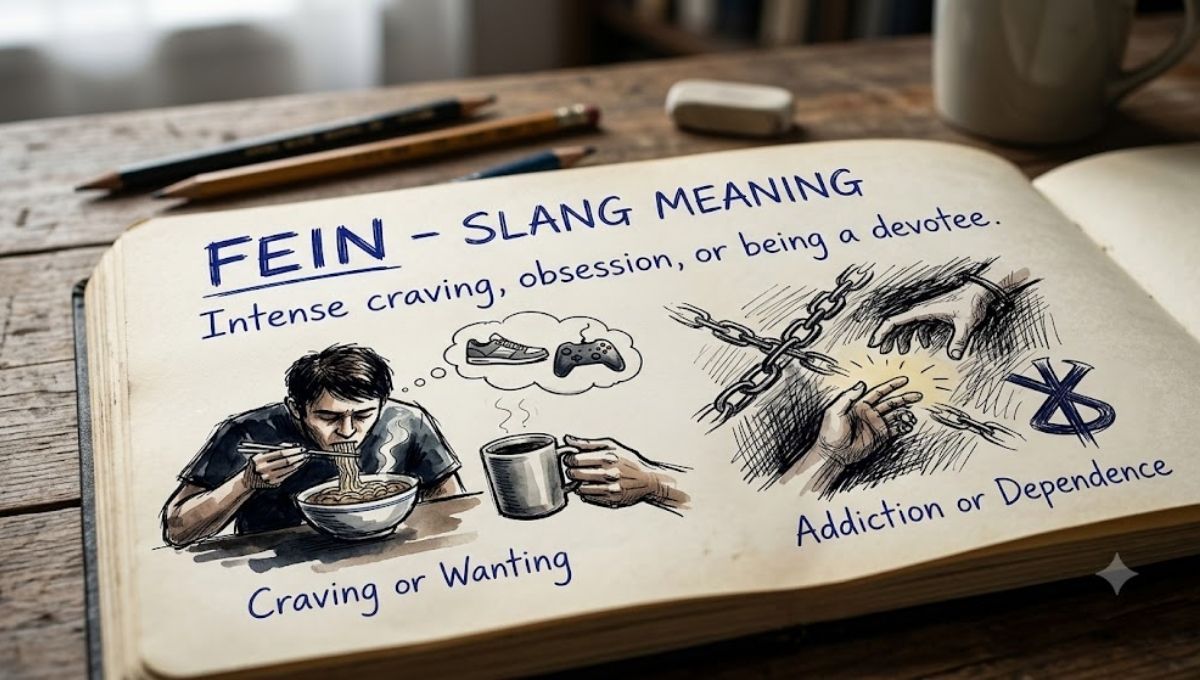
Here’s the short version before we go deep: the fein definition slang almost always points back to intense craving or obsession. But context changes everything with this word, so let’s split it into its three real meanings.
Slang Meaning (Most Common Online)
This is the one you’ll run into 90% of the time. The fein slang meaning describes someone who wants something so badly it’s almost comical — food, attention, a new video game drop, a person, whatever. Calling someone “a fein” for something means they can’t stop thinking about it or chasing it.
Example: “She’s a fein for iced coffee, she has like four a day.”
That sentence isn’t about addiction in the clinical sense. It’s exaggeration for comedic effect, which is exactly how most Gen Z slang operates — take something real, stretch it until it’s funny, and repeat it until it sticks.
German Meaning
Here’s a fact most slang explainers skip entirely: fein is a real word in the German language, and it’s been there for centuries, long before TikTok existed. In German, “fein” translates to “fine,” “nice,” or “delicate.” You’ll hear it in phrases like “Das ist fein” (“That’s nice/fine”). This has zero connection to the internet slang version — it’s a coincidence of spelling, not a shared root.
Misspelling or Variation
Sometimes “fein” is just… a typo. Fast typing, autocorrect, or a keyboard slip can turn “fine” into “fein” without anyone meaning anything by it. Context is your best clue here: if someone types “I’m fein, thanks for asking,” they almost certainly meant “fine.”
| Meaning | Origin | Example Sentence |
|---|---|---|
| Craving/obsession (slang) | English, from “fiend” | “He’s a fein for that new game” |
| Fine/nice (German) | German language | “Das Essen ist fein” |
| Typo for “fine” | Autocorrect/typing error | “I’m fein, just tired” |
Background & Origin of the Word “Fein”
To understand the fein origin, you have to go back to the word “fiend.” Historically, “fiend” described someone consumed by addiction, often specifically drug addiction. In casual speech, “fiend” naturally got shortened to “feen,” and that phonetic spelling eventually splintered into “fein,” “feening,” and “feenin’.”
Hip-hop culture picked up “fiend” decades ago as a way to describe craving anything — money, fame, a person. That’s the bridge between the heavier, older meaning and the lighter one you see online today. The tone softened over time. What started as slang tied to substance addiction slowly became a way to describe any intense, slightly obsessive want.
One specific cultural moment accelerated things further: Travis Scott’s track “FE!N” with Playboi Carti pushed the stylized spelling into meme culture and TikTok captions in a big way. From there, the word spread fast — Discord servers, gaming chats, Instagram comment sections, and eventually just… everyday texting.
As one TikTok creator explained while breaking down the trend, being a “feen” for something is basically just “wanting something so bad it’s kind of embarrassing, but you say it anyway.”
Usage in Different Contexts
The fein usage shifts depending on where and how it’s used. Here’s how it typically breaks down.
Casual chat: Used between friends, usually as light teasing. “You’re such a fein for that show.”
Social media: Captions and comments, often self-deprecating. “Me feenin’ for validation after one selfie.”
Emotional expression: Describing a genuine pull toward something — a person, a memory, a feeling — without sounding overly serious.
Humorous tone: The most common register by far. It’s rarely used with a straight face.
Meanings Across Platforms
The fein in social media landscape isn’t uniform — each platform has its own flavor of usage.
- WhatsApp: Mostly personal chats, often used between friends as playful ribbing.
- Instagram: Comment sections and captions, frequently self-deprecating humor.
- TikTok: The epicenter. Comment threads, GRWM videos, and duets built entirely around the word.
- Snapchat: Quick, casual use in captions describing strong wants (“feenin’ for tacos rn”).
Other Fields Where “Fein” Appears
Beyond internet slang, the word shows up in a few legitimate, unrelated contexts worth knowing about.
German language: As covered above, a standalone adjective meaning “fine” or “nice,” used in everyday German conversation with no tie to English slang.
Surnames: “Fein” also appears as a surname of German-Jewish origin, unrelated to either the slang or the adjective use.
These are the only well-documented non-slang contexts. If you’ve seen claims that “fein” has some specialized meaning in medicine, aviation, or engineering — that’s not accurate. It’s worth being skeptical of slang guides that pad out sections with meanings that don’t actually exist just to look comprehensive.
Common Misconceptions & Mistakes
A lot of people mix up fein vs fiend and assume they’re totally separate words. They’re not — “fein” is a spelling variation that grew out of “fiend,” just softened in tone.
Reality: Modern use of “fein” rarely implies literal addiction. It’s almost always exaggerated enthusiasm, not a genuine clinical description.
Another common mix-up: assuming “fein” and “fine” are interchangeable. They can look identical due to typos, but as slang, they mean completely different things.
Similar Terms & Alternatives
If you’re trying to understand where this word sits among other slang, here’s a quick comparison table.
| Term | Meaning | Tone |
|---|---|---|
| Feining/feenin’ | Verb form of fein; actively craving | Playful, sometimes intense |
| Jonesing | Strong craving, often for a substance | Slightly more serious |
| Thirsting | Craving attention or a person | Flirty, teasing |
| Simping | Excessive devotion to someone | Teasing, sometimes critical |
| Down bad | Emotionally overwhelmed by desire | Dramatic, humorous |
None of these are perfect synonyms — “fein” carries its own specific blend of casual and exaggerated that the others don’t quite capture.
How to Respond to “Fein” in Chat
If someone calls you a fein, you’ve got options:
- Friendly reply: “Guilty as charged, honestly.”
- Playful reply: “You caught me, I can’t help it.”
- Supportive reply: “Nothing wrong with wanting good things.”
- Confused reply: “Wait, fein like… craving? Explain.”
Differences From Similar Words
The clearest distinction to make is fein vs fiend. “Fiend” is the original, older word — heavier, tied historically to addiction. “Fein” is the internet-softened descendant, used mostly for comedic exaggeration. Knowing this difference helps you read tone correctly; calling someone a “fiend” in casual conversation can land more harshly than calling them a “fein.”
Relevance in Online Conversations & Dating Apps
Here’s a usage pattern a lot of guides miss: on dating apps and in flirty texting, calling someone a “fein” for you is a compliment. It implies they clearly like you, maybe even a little too obviously. “He’s fein for you, it’s kind of cute” is a completely normal sentence in this context, and it’s one of the more distinct, specific applications of the word beyond food or gaming references.
Popularity & Trends Over Time
Is the word still relevant, or has it already faded? Based on current usage patterns, “fein” has moved past its peak viral moment but remains in steady, active use across TikTok, Discord, and texting. It’s not a dead trend, and it’s not brand new either — it’s settled into that middle stage where slang becomes normalized rather than novel.
FAQs
What does fein mean in slang?
It describes someone who craves or obsesses over something, often to an exaggerated, humorous degree.
Is fein a real English word?
Not in traditional dictionaries. It’s an internet-era spelling variation of “fiend.”
Is fein the same as fine?
No. They can look similar due to typos, but as slang, “fein” means craving, not “okay” or “fine.”
Why do people say feining?
“Feining” (or feenin’/feining) is the verb form, describing the act of actively wanting something in the moment.
What does fien mean on TikTok?
Same as “fein” — it’s a variant spelling used in comments and captions to describe intense craving or hype.
Is fein a bad word?
Generally, no. Is fein a bad word is a common question, but the honest answer is that it’s rarely offensive. It leans playful, though tone and context can shift how it lands.
Conclusion
So, what is fein, really? At its core, it’s a word about wanting something — badly, obviously, sometimes embarrassingly — wrapped in internet humor. The fein def boils down to craving or obsession, softened from its older “fiend” roots into something lighter and far more common in daily texting. Whether you’re seeing it on TikTok, in a group chat, or wondering about fein pronunciation (it rhymes with “vein”), you now know exactly what’s being said — and how to reply.